
Vorwerk is one of Germany’s most admired engineering companies. Their Thermomix, a 1400€ multifunctional kitchen machine, became something close to a cultural institution. So, when Vorwerk announced the Temial in 2018, a fully automated tea brewer priced at 599€, the logic seemed reasonable. The formula had worked once. Why not again?
It did not.
On June 30, 2022, Vorwerk quietly discontinued the Temial after four troubled years on the market.1 No replacement followed. The company’s 2022 annual report acknowledged that “there is no guarantee of success for new business models.”2
What makes the Temial worth studying is that this was not a technical problem. The machine brewed tea at the correct temperature and steep time. Vorwerk had engineered a solution to a problem that most users did not have. This analysis uses the Stanford d.school Design Thinking model to examine what went wrong, as the case illustrates its pitfalls particularly well.
1. Problem Context
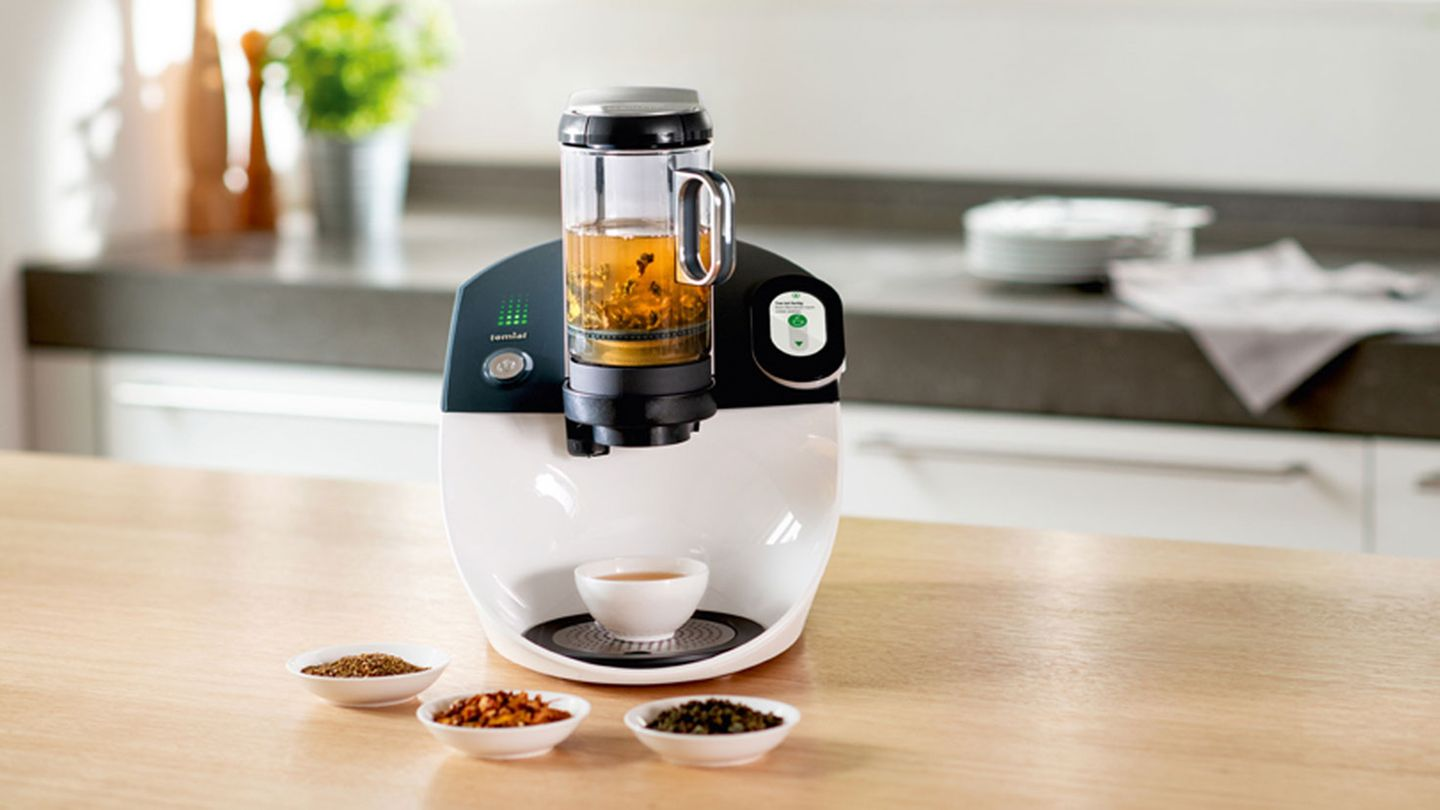

The Temial launched on May 16, 2018, as an automated loose-leaf tea brewing system.5 The starter set (the machine, two ceramic bowls, a glass pitcher, and a Brita filter cartridge) cost 599€.6 A QR code scanner read brewing parameters from proprietary Vorwerk tea sachets and automatically set temperature and steep time for each variety.7
The problem Vorwerk set out to solve was roughly: brewing great tea is technically complex, and most people get the temperature and timing wrong. That is a fair observation. But notice whose problem this actually is. It is an engineer’s problem, framed from the inside, shaped by what Vorwerk knew how to build. Design Thinking starts from a different angle: who experiences this as a painful problem, and how badly does it actually hurt them?
For tea, that question is awkward. The people who care most about brewing precision are dedicated tea drinkers, which do not experience the process as a burden. For them, it is the point. The ritual of choosing water temperature, watching the leaves open, selecting the right vessel: these are not annoyances to be solved. They are the reason someone chooses loose-leaf tea over a teabag in the first place. And casual tea drinkers, who might have welcomed some form of automation, were never going to spend 599€ on a marginally better cup they barely noticed. The problem statement was built internally and never tested against real users.
2. Stakeholder & User Analysis
Vorwerk’s marketing promised “authentic tea culture”8, while the product’s core promise was that automation would deliver consistently perfect results every time. The people who care most about authentic tea culture are precisely those least interested in handing the process over to a machine. Selecting water temperature, watching the leaves unfurl and choosing the right vessel are not inconveniences for the target group. They are what tea is. Introducing a QR code and a pump does not improve the experience for an enthusiast. It rather strips away what they came for.
On the other side, casual tea drinkers had no reason to spend 599€. They used teabags and a cheap kettle and were satisfied with that. This left a hypothetical middle group: People who drink loose-leaf tea regularly, care about quality, but find the process inconvenient enough to pay six hundred euros to simplify it. This segment is very small. The entire business model rested on it.
Several stakeholders were also overlooked. Vorwerk’s proprietary sachet system, priced at 6–12€ per pack,9 kept all recurring revenue inside the company. Retail partners could sell the hardware once but received nothing from ongoing purchases. More significantly, independent tea suppliers were locked out entirely. A dedicated tea drinker who had spent years sourcing specific oolongs or single-origin teas could not use them in the Temial at all. By building a closed system, Vorwerk excluded the very consumers most likely to value precision brewing.
The environmental angle is also notable. Loose-leaf tea is one of the low-waste options in a beverage market otherwise full of packaging problems. Adding proprietary paper sachets to that equation runs against what quality-conscious tea consumers tend to care about. Vorwerk never addressed this publicly, which suggests it was not raised internally either.
3. Design Thinking Breakdown
The Stanford d.school model defines five phases: Empathize, Define, Ideate, Prototype, and Test. For the Temial, failures began at phase one and went on from there.
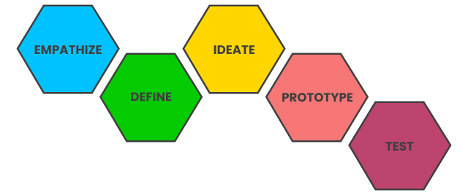
The empathy phase was replaced by category analysis. Real empathy work would have meant spending time with tea drinkers in their kitchens and tea shops. It meant watching what they do, asking questions, paying attention to the gap between what people say and what they actually do. That kind of observation tends to surface things market research misses. What seems to have happened instead is the reverse: Vorwerk knew that people drink tea and that convenience is broadly valued, and concluded from this that a convenient tea product must have a market. Market research and empathy are not interchangeable. Research can tell you that a category exists; empathy tells you what people’s actual relationship with it looks like, and those are very different kinds of knowledge.
The define phase then locked in an assumption that was never verified. A genuine Point of View, built from real user observation, might have looked something like:
A tea enthusiast who values precision needs a way to explore new varieties with confidence, because the range of preparation requirements creates a real barrier to experimentation.
That statement points toward different kinds of solutions. Vorwerk actually built, what was solving for:
A busy person finds loose-leaf brewing too complicated.
Nobody checked whether this user existed at scale, let alone whether they would pay 599€ for a solution.
Ideation was similarly constrained before it started. Good ideation usually involves stepping back from business model assumptions, at least temporarily. Vorwerk’s process appears to have done the opposite. The Thermomix template revolves around expensive hardware, proprietary ecosystem, direct sales, and a premium price, was already decided before the ideation question was properly formed. The brief became how to fit tea into the template, not whether the template fit tea. Alternatives appear never to have been seriously explored.
The prototyping and testing phase validated execution, not concept. The Temial won a Red Dot Design Award.11 It was well-made. But nobody seems to have asked whether the core premise was actually true. When critical reviews appeared at launch, Vorwerk’s response was a PR campaign describing the feedback as “rash judgments of important innovations.”12 Treating early negative reviews as a communications problem rather than as useful signal is exactly how you miss what testing is supposed to tell you. The launch then collapsed on a technical level too: software problems caused devices to freeze, deliveries were halted, and Vorwerk ended up offering 150€ compensation to customers who had pre-paid and waited months.13 Losing customer trust at launch, for a product already facing serious questions about its basic premise, left very little room to recover.
4. Root Causes of Failure
The organizational root cause is what might be called the success trap. Companies that succeed with one model tend to apply it again. The problem comes when the model becomes the answer before anyone has asked whether it actually fits the new problem. Vorwerk’s approach worked for the Thermomix because that machine replaced real, recurring labor that people genuinely disliked doing. Tea brewing, for the audience Vorwerk was targeting, is nothing like that. It is voluntary, it is slow, and for many people it is the best five minutes of their morning. Applying the same logic without questioning that difference was a strategic mistake and a failure to ask the most basic question.
The cultural failure is perhaps the sharpest. Vorwerk’s marketing talked about “authentic tea culture” while building something that removes the very practice that makes tea culture meaningful. In many tea cultures, preparing the tea is the experience, not a step before it. The careful attention, the slow pour, the quiet watching. Removing that to produce a push-button output does not deliver authentic tea culture.
5. Redesign Proposal
The argument here is not simply “build a cheaper Temial.” A genuine Design Thinking process would likely have arrived at a different product altogether, or possibly no physical hardware at all.
It would have started with real empathy research: What does your routine actually look like? What about it frustrates you, if anything? What would “better tea” mean in practice? This research would almost certainly have surfaced that the enthusiast segment does not want automation, and the casual segment will not pay 599€.
From honest research comes an honest problem statement, probably something like: A curious but inexperienced loose-leaf tea drinker needs a way to explore different varieties, because the range of options and preparation requirements feels overwhelming. This user exists. The problem is real. And it does not require a 599€ machine to address. As the d.school process guide puts it, good design teams “prototype as if you know you’re right, test as if you know you’re wrong.”14 The Temial did the former. It skipped the latter.
With a genuine Point of View, ideation opens considerably: a companion app with brewing guidance that works with any tea from any brand, a subscription model with no hardware lock-in, a lower-price accessory at 80–120€ that provides temperature guidance while the user keeps their own pot and their own tea. These are not radical ideas. They are simply what becomes visible when you do not start with a predetermined business model template.
6. Lessons Learned
The Temial is a fairly clean case study in what happens when Design Thinking is skipped at the moments it matters most.
The most important lesson concerns the difference between automating a task and automating a ritual. People will pay to have things they dislike doing taken off their hands. But when the process is the reason, someone does something, removing the process removes the value. Tea brewing for an enthusiast is not preparation, but the activity itself. Getting this distinction right requires genuine empathy work.
A related lesson is about the limits of proven models. The Thermomix template was right for the Thermomix. That does not mean it is right for everything. Applying a business model to a new product category requires first asking whether the underlying conditions that made the model work are present in the new context. For the Temial, they were not, and nobody seems to have asked that question.
The difference between market research and empathy also deserves attention, because it is easy to treat them as interchangeable when they are not. Research tells you how many people drink loose-leaf tea. Empathy tells you what tea means to those people. Both matter, but they produce different kinds of knowledge.
Finally, early criticism deserves to be treated as information, not as something to manage. The Temial’s first wave of critical reviews was, in retrospect, accurate. The product-market mismatch those reviewers identified was real. A team that treats external criticism as a signal to act on, rather than a reputation problem to contain, has a chance to adapt. Vorwerk did not take that chance, and the Temial ran four years before the plug was pulled.
Sources
- temial.vorwerk.de Kundeninformation: Die Temial-Teemaschine ↩︎
- Vorwerk Group Annual Report 2022 Group Management Report 2022 ↩︎
- stern.de Vorwerk-Kunden sauer: Luxus-Teekocher Temial wird zum Pannengerät ↩︎
- unsplash.com Tea Ritual ↩︎
- vorwerk-group.com Vorwerk Unveils a New Product: Experience Authentic Tea Culture with the Temial Tea Maker ↩︎
- testberichte.de Vorwerk Temial im Test ↩︎
- smart-industry.net IoT and Health: Smart Tea with Vorwerk’s Temial ↩︎
- Vorwerk Temial: Authentische Teekultur neu erleben ↩︎
- teesa.de Vorwerk Teesortiment ↩︎
- medium.com Design Thinking’s Full Potential: 5 Essential Models ↩︎
- red-dot.org Red Dot Design Award: Temial ↩︎
- vorwerk-group.com Part of digital branding is listening to users ↩︎
- Handelsblatt Softwareprobleme: Fehlstart für Vorwerks Teekocher Temial ↩︎
- Stanford d.school An Introduction to Design Thinking: Process Guide ↩︎
All Sources last accessed April 19, 2026.