
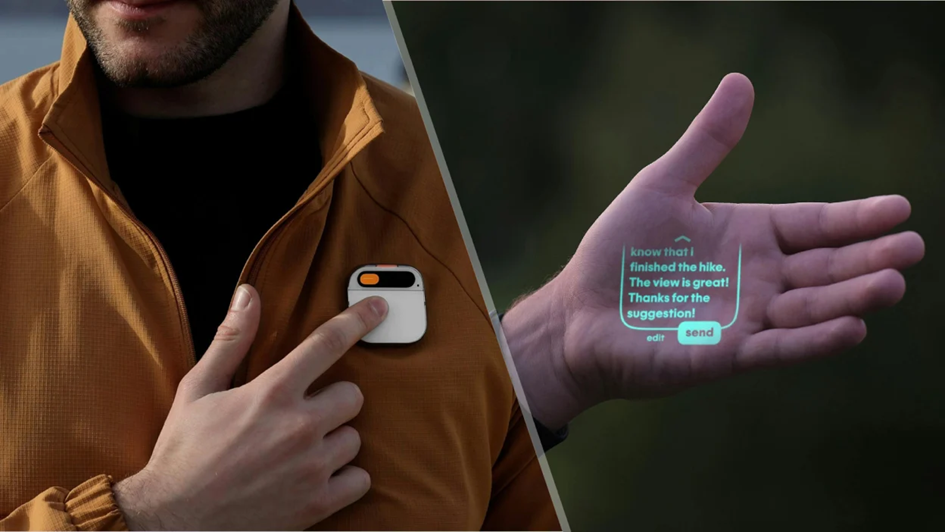
The Humane AI Pin was a standalone AI companion device released in 2024 by the startup Humane Inc., which was founded by former Apple employees Imran Chaudhri and Bethany Bongiorno. It was a small square, 5 x 5 cm wearable device you could attach to your shirt on your chest using a magnetic system. The Pin featured a light, camera, microphone, speaker, touchpad, and a tiny laser projector. Using the projector, it could display a small screen on your palm. You could ask the Humane AI Pin questions and issue commands, like sending a message to a friend.
The Pin was torn to shreds by tech reviewers. Famous tech reviewer Marques Brownlee called it “the worst product I’ve ever reviewed.” What went wrong?
Problem Context
The founders of Humane envisioned solving the issue of smartphone dependency by developing a product that reduces screen time while providing a 24/7 assistant by the user’s side. In today’s world, we use our phones too much. Consequently, they developed a technological solution to appeal to users struggling with the same problem (which includes most of society!).
Stakeholder & User Analysis
Humane Inc.’s intended users were early adopters, tech enthusiasts, and people who wanted to spend less time with their smartphones. But this group was never truly reached because the reviews and the subsequent public perception were so poor. The ship sank before reaching its target audience. But why?
The Humane AI Pin had multiple flaws that were heavily criticized by reviewers. First, the device was very slow because it lacked the newest chip and had to send everything to the cloud. Wait times of up to 10 seconds were common. Furthermore, the answers were often incorrect because the AI tended to hallucinate. To use the device, you also needed consistently good internet connection to facilitate cloud queries. Speech recognition was unreliable, and the battery life was short (requiring you to charge it multiple times a day). In addition, the device ran hot, creating an uncomfortable feeling on your chest due to its magnetic mounting system. This placement was also problematic because of pressure from seat belts. Moreover, the projector quality was poor, and the camera produced pixelated images and videos. Additionally, you couldn’t use popular apps like WhatsApp because the Pin didn’t support third-party apps (aside from the music app Tidal).
Therefore, there were never any actual users, just reviewers. They reported using it only in rare scenarios, like taking a spontaneous note in bed or recording first-person videos. But for most of them, using it felt like work because of the poor battery life and unintuitive interface.
Furthermore, there were overlooked stakeholders, such as the surrounding environment. Many reported feeling uncomfortable using it in a café or a park (since everyone could hear your questions and the Pin’s answers -> no privacy!). Although the device had a light that indicated when it was recording, many people criticized it because this light was not visible to most of the people. Strangers often felt like they were being watched. Using WhatsApp is the standard in our society, and without it, you risk being excluded from social life. Many reviewers noted that they couldn’t communicate with their friends, and vice versa.
But the biggest overlooked stakeholder was the smartphone, because of the high overlap between them. It was designed to be a separate device, but replacing the phone proved hard because of the AI Pin’s many disadvantages. The smartphone can do everything the Humane AI Pin does, but better. Googling on your smartphone or asking ChatGPT is nearly always faster and more accurate.
Conflicting needs, such as privacy versus always-on assistance, portability versus battery life, and ambition (a standalone device) versus compatibility (with the smartphone), should also be mentioned.
Design Thinking Breakdown
From a Design Thinking perspective many mistakes were made. The following breakdown is based on the Stanford University Design Thinking model because of its clear, user-centric, and innovative structure for addressing complex issues with different stakeholders.
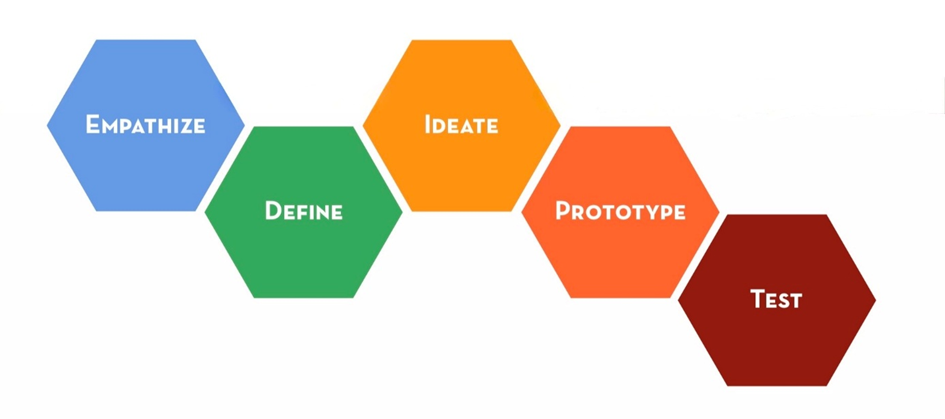
- Empathize:
- “To create meaningful innovations, you need to know your users and care about their lives.”
- This phase is about understanding the user’s perspective by identifying their needs, issues, motivations, and emotions. You can conduct interviews or observations to develop a deep understanding of what users really do, not just what they say. Developers shouldn’t make their own assumptions about their users.
- It appears that Humane conducted no real user research. No everyday observations of different users were made. The real issue with smartphones was overestimated or misunderstood. Contexts like noisy environments, direct sunlight, clothing choice, or social acceptance were not properly considered.
- Define:
- “Framing the right problem is the only way to create the right solution”
- You analyze the findings from the empathize phase and transform them into a clear, meaningful, and actionable problem statement. The focus must be on a relevant user problem. A wrongly defined problem statement leads to flawed solutions.
- The problem of “replacing the smartphone” was too broad and too abstract. No concrete need was solved. Therefore, the core problem was not limited enough. The benefits were not proportional to the price ($699) and the monthly subscription ($24).
- Ideate:
- “It’s not about coming up with the right idea, it’s about generating the broadest range of possibilities.”
- This involves developing a wide range of possible solutions by collecting ideas through methods like brainstorming. Good solutions are usually not the most obvious ones. After this phase, you should be able to create prototypes.
- Creating a standalone device was too radical and too premature because there was no idea to replace all user needs currently met by a smartphone (e.g., Apps). An alternative device connected to a smartphone was not considered. The idea appeared to be more visionary rather than user centric.
- Prototype:
- “Build to think and test to learn.”
- This phase involves creating concrete experiments based on the ideas from the previous phase. There are multiple forms of a prototype, e.g., physical/digital models, storyboards, role-playing, or a physical environment. You test your ideas fast and cheaply instead of discussing theoretical use cases. It helps to identify what works, what doesn’t, and what should be improved.
- The Humane AI Pin felt more like a prototype than a finished product. It was not yet technically mature enough because of its weaknesses in speed, battery life, heat management, speech recognition, and projector quality. Although the hardware was of high quality, the overall functionality didn’t work in everyday life.
- Test:
- “Testing is an opportunity to learn about your solution and your user.”
- This is about getting feedback and insights by testing your prototypes with real users. You try to identify whether your prototype works in everyday life, if users understand the product, and if it actually solves the original problem. Often, users use the product differently, new issues emerge, and assumptions are proven wrong.
- Everyday tests under realistic conditions were apparently not undertaken. The weaknesses were not sufficiently addressed before the launch. It looks like the product was brought to the market too early.
Humane didn’t truly apply Design Thinking. They focused too heavily on a vision and too little on a concrete, user-centered problem. The resulting Humane AI Pin was more of an impressive idea than a fully matured and everyday solution.
Root Causes of Failure
Organizational:
Humane was founded by former Apple employees with strong product and design standards which led to a powerful vision and high internal expectations from the startup’s leadership. In this sense, it was designed for a future with an autonomous AI environment rather than for the present world. Consequently, it was described as a “victim of its future ambition” by Marques Brownlee. In addition, famous investors like Microsoft, OpenAI’s Sam Altman and LG increased expectations to the point that there was immense pressure to launch it, which led to an early release. The product was launched unfinished, and many features were pledged to be implemented in the future (which never happened!). Additionally, a clear focus was missing because the device had too many functions at once (assistant, communication device, camera, translator, projector) that failed to demonstrate a common core benefit.
Technological:
As mentioned before, the product suffered from many technological difficulties, such as cloud dependence, hallucinations, poor speech recognition, short battery life, overheating, poor projector quality, outdated chips, and the lack of an app ecosystem. All of this led to a very poor first impression, showing that the product was not market-ready.
Cultural:
Today, smartphones play a central role in our society. Replacing them is only possible with a product that is significantly better and more practical. This was not possible for the AI Pin because of its limitations; instead, it was used more like an additional device alongside the smartphone. Also, users could not verify the correctness of the answers, which led to mistrust, and users started relying on their smartphones again. Moreover, the AI Pin was too clunky, noticeable and cumbersome instead of being the opposite. The vision of reducing distractions was not achieved, instead, users had to pay more attention to the product just to use it.
Ethical/societal:
The high price ($699 + a $24 monthly subscription) made the product unattractive or inaccessible for many potential users. The previously mentioned privacy concerns regarding a camera on your chest that could always be filming and a microphone that could always be recording (not only you, but also other people!) also played a big role. Blind trust was not possible due to hallucinations, further limiting the product’s use. One must also ask whether a theoretical always-on AI on your body is even desirable, or if humans are better defined by their mistakes and contradictions.
Redesign Proposal
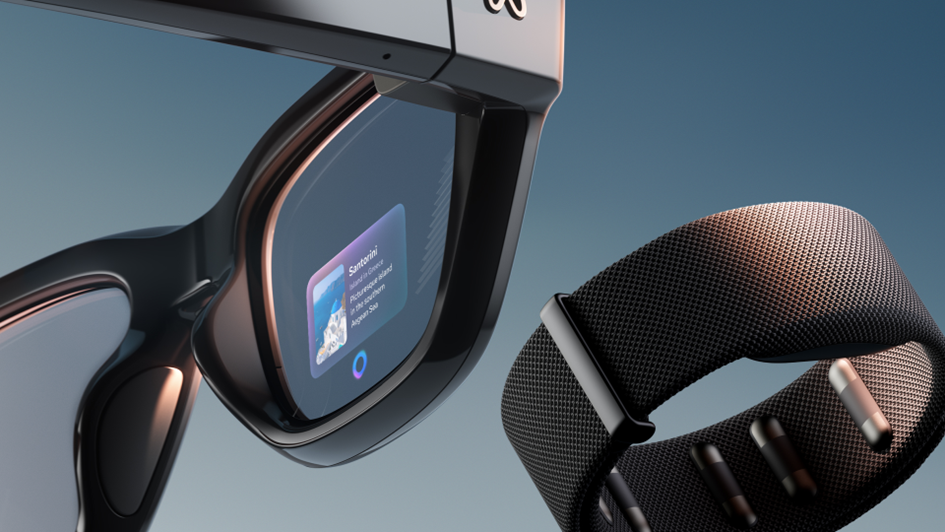
Real Design Thinking should have been applied to the development of the product. How could the different phases have been implemented correctly?
- Empathize:
- Instead of aiming to replace the smartphone, Humane should have looked at everyday situations where smartphones are disturbing in different life situations (e.g., home, train, office…). Average users (not just tech enthusiasts!) should have been consulted about how they feel using such a product in different social contexts.
- Define:
- The problem should have been defined more clearly and more concretely. Instead of building a “smartphone killer,” they should have defined a problem like: “How can we solve specific situations where people prefer not to use their smartphones?” Core problems could have been fast notes or short AI interactions. It was a mistake to solve multiple problems at the same time, like having an assistant, camera, translator and projector.
- Ideate:
- Multiple potential solutions should have been developed. Instead of only developing a standalone device, variants with smartphone connections should have been explored too. Incremental testing with a companion device would have been the right step. The team should have examined whether an independent device is even necessary or if alternative form factors, like a smartwatch or glasses, are more suitable.
- Prototype:
- Developing simple models for testing single functions (first speech, then projection, then camera…) could have identified technical risks like speed, battery life, overheating, and readability early on. Additionally, testing the form factor in realistic situations like driving or sports would have shown problems with size and comfort.
- Test:
- More tests in everyday situations, such as sunny and noisy environments were needed. Key questions should have been answered: “Does the product hallucinate? Do users trust it? Can the answer be verified? Is the product socially acceptable (disturbing, embarrassing)?” If these questions can’t be answered positively, central assumptions or the product idea must change.
In general, multidisciplinary teams (UX, hardware, software, AI, privacy & security, design and business) should work together better. The entire ecosystem (e.g., the app environment) and actual user interactions should be prioritized over following a strict vision. Getting feedback from potential users at an early stage of development is essential for a successful product and smaller roadmaps with clear core benefits (introducing extensions only after the successful implementation of initial milestones). Finally, the launch of a product should only occur when it is ready for everyday use, never rely on hype alone.
Lessons Learned
Future teams should start with problem development, not technology, because technology is not an end in itself. Big visions need small and verifiable milestones––especially if it’s a new product category because the product must be better in everyday situations than its alternative (here: smartphone). Reliability and trust are more important than a futuristic look. Replacing a standardized product like a smartphone is difficult; often, a companion device is smarter than a complete replacement.
The Design Thinking model shows that user research is essential for successful products because real needs can only be identified through real-world contexts. Cultural and social acceptance should be tested early; what is technically possible is not automatically the right solution for everyday life. Additionally, price and benefits must be aligned to prove that an expensive product offers genuine added value. The Design Thinking model should also be applied iteratively to identify potential problems even in later stages (hardware issues can be a big problem!). Furthermore, wearables constantly operate within social environments; therefore, not only the end user but also the surrounding people should be considered (specifically, what do they think about the product?). Ultimately, hype is no substitute for product maturity, because volatile attention cannot permanently cover technical immaturity.
Where is Humane today?
Humane no longer exists as an independent entity because the AI Pin was hardly bought by anyone. In February 2025 (10 months after the release of the Humane AI Pin), they were acquired by HP. The former Humane employees are now part of the newly formed HP IQ team that helps HP integrate AI into its products. The AI Pin, with its cloud services, was discontinued and is essentially e-waste today.
Conclusion
The title of this blog post is based on Thomas A. Edison’s quote, “Vision without execution is hallucination,” which describes the fate of the Humane AI Pin perfectly. Having an idea or vision is meaningless without the action––and Design Thinking execution––needed to make it real.
Sources
PROCESS GUIDE. (n.d.). An introduction to design thinking. https://web.stanford.edu/~mshanks/MichaelShanks/files/509554.pdf
Wiggers, K. (2023, March 9). Humane, a secretive AI startup founded by ex-Apple employees, raises another $100M. TechCrunch. https://techcrunch.com/2023/03/08/humane-the-secretive-ai-startup-founded-by-ex-apple-employees-raises-another-100m/
Stolle, B. (2014, July 22). Vision without execution is just hallucination. Forbes. https://www.forbes.com/sites/bryanstolle/2014/07/22/vision-without-execution-is-just-hallucination/
Zeff, M. (2025, February 19). Humane’s AI Pin is dead, as HP buys startup’s assets for $116M. TechCrunch. https://techcrunch.com/2025/02/18/humanes-ai-pin-is-dead-as-hp-buys-startups-assets-for-116m/
Designed for human potential | HP IQ. (n.d.). https://www.humane.com/ (Open with webarchive on April 5, 2024)
humane. (2023b, November 16). This is the Humane Ai Pin [Video]. YouTube. https://www.youtube.com/watch?v=9lNIwOOMVHk
Marques Brownlee. (2024, April 14). The worst product I’ve ever reviewed. . . for now [Video]. YouTube. https://www.youtube.com/watch?v=TitZV6k8zfA
Mrwhosetheboss. (2024, April 11). I tested the Humane AI Pin – It’s not good. [Video]. YouTube. https://www.youtube.com/watch?v=0O2yTG3n1Vc
iKnowReview. (2024, June 9). Nach den Updates: Humane Ai Pin! (review) [Video]. YouTube. https://www.youtube.com/watch?v=i9AVxOvABAU
Images
PROCESS GUIDE. (n.d.). An introduction to design thinking. https://web.stanford.edu/~mshanks/MichaelShanks/files/509554.pdf
Designed for human potential | HP IQ. (n.d.). https://www.humane.com/ (Open with webarchive on April 5, 2024)
Meta Platforms, Inc. (2025, September 17). Meta Ray-Ban Display: AI glasses with an EMG wristband. Meta Newsroom. https://about.fb.com/news/2025/09/meta-ray-ban-display-ai-glasses-emg-wristband/